Showing posts with label Alphabet. Show all posts

Previewing Our History Lessons


We are still enjoying our summer break, but that doesn't mean we aren't learning new things!

For the most part, our summer learning has been very laid back and relaxing.  However, one thing I definitely wanted to do over these relaxing weeks was provide our children with an introduction to some of our upcoming history topics, especially for the younger children.  The older two children have been through this time period before, but even so, a refresher can be nice before the school year 'officially' starts.

A few library books we borrowed recently...

Whatever Happened to the Pony Express, by Verla Kay
Using a poetical style, Verla Kay intertwines family letters with a wonderful poem full of strong rhythm and fun descriptive words. This style made the book an enjoyable read aloud with fascinating facts interspersed.  {Personally, I learned about the trial run with camels, which didn't work out and were replaced by horses.}  The extended family's communications span the time period of the pony express.  The family's dilemmas increase with time, and are eventually worked out just as the telegraph and trains completely replace the pony express.  It was a wonderful way to trace the historical developments of delivering mail throughout the continental United States.

Civil War Drummer Boy, by Verla Kay
Another selection by Verla Kay was also a poem.  Civil War Drummer Boy is the story of a young boy who becomes a drummer for the Confederate Army.  Though the book has an adventure feel to it, the reality of war is shared.  Vivid words describe the experiences of Johnny as he signs up, serves, and eventually returns home during the Civil War era.  The ending does leave readers with some hope as the family gathers on a porch to enjoy the flower blossoms and one another.  

A Picture Book of Sam Houston, by David A. Adler and Michael S. Adler
This one was quite the informative picture book biography.  We learned about Houston's political career as governor, senator, and president of Texas. Intertwined amongst these roles, we read about Houston's personal beliefs against slavery and his courage to stand up (and lose his job) because he would not be swayed to sign something he didn't believe: a loyalty oath to the Confederacy.  The illustrations by Matt Collins are superb, soft pictures filled with vibrant colors.

The Cowboy ABC, by Chris Demarest
A fun alphabet book telling about cowboys and the west was another read aloud.  Each page has one letter and one short one sentence per page.  The illustrations show the idea or item of the word highlighted for that letter.  Some of those items are kerchief, lariat, reigns, and tumbleweed.  It was a simple and easy introduction to cowboy and western life for my youngest who will begin kindergarten soon.

Looking at Lincoln, by Maira Kalman
This book was about a young girl who sees a man who reminds her of Lincoln.  This prompts her to research and learn more about Abraham Lincoln.  She shares her findings within the book by narrating them to the reader.  Interesting tidbits, like there are 16, 000 books written about him, are blended with common facts about his schooling.  The main character exudes a fascination and admiration of Lincoln which makes the fact reading enjoyable.  Our children recognized the Lincoln statue referenced to at the end, because we had visited it years ago on one of our trips to D.C.

Not only does this simple preview of a few of our history topics excite our children, it helps me to plan for our upcoming year as I gauge their interest and knowledge.

The Preschool A to Z Year


It is most likely our last preschool year, as our youngest will start kindergarten next school year and we currently have no babies in the house.  Even though our children don't go off to school, we still 'mourn' the loss of the preschool years, but we anticipate with joy a new chapter in our family's life.

Last week, our youngest finished his last year of preschool learning.  In this time, our children learn letters and sounds, from A to Z, numbers and counting, and simple mathematical concepts.  We also like to introduce our preschoolers to basic concepts in science, history, and the arts.  These are generally not formal lessons, but from time to time, our younger children have had unit lessons based on on books or historical time periods.  When the material is applicable, our preschoolers have participated in the group lessons alongside of our older children.  The younger children often absorb quite a lot of information during these times.  We also try to incorporate fun activities and art projects into the preschool days.

With the winding down of our final preschool year, I thought it might be nice to record our main resources for teaching preschool.  We find a lot, A LOT, of books at our local library.  Among these are fairy tales, science books, and just plain ol' fun books to read.  However, we do have a few tried and true resources/curriculum we have used for most, if not all, of our children. 

A few of our favorite preschool resources are:
Get Ready for the Code, Explode the Code Primer, Book A, by Nancy Hall
Get Set for the Code, Explode the Code Primer, Book B, by Nancy Hall
Go for the Code, Explode the Code Primer, Book C, by Nancy Hall
Christian Liberty Preschool Activity Book, by Sherry Kurz, Florence Lindstrom, and Barbara Beal
Christian Liberty Preschool Drill Book, by Sherry Kurz
Christian Liberty Nature Reader, Book K, by Florence M. Lindstrom

Two Kindergarten resources that we use in the A to Z year of preschool are:
Saxon Math, Level K, by Nancy Larson
A Reason for Handwriting, Level K, by Carol Ann Retzer


Related Posts:
Three ABC Bible Resources for Young Learners

Three ABC Bible Resources for Young Learners

Throughout the years, each of our children has started learning to read by first learning their ABC's.  For me, it is fun to try to incorporate the ABC's into as many subjects as possible.  During that prekindergarten time, our children are immersed in the ABC's.  We even use a few ABC Bible resources.  Three of our favorites are:

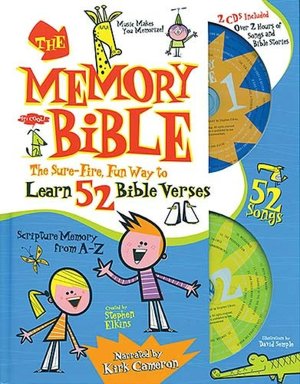
The Memory Bible: The Sure-Fire Way to Learn 52 Bible Verses

The Memory Bible: Learn 52 Bible Verses, created by Stephen Elkins
Bible Stories From A to Z (ages 5-9), by Mary Murray
Sing the Word from A to Z, by Anne & Steve Harrow

The Memory Bible: Learn 52 Bible Verses offers a little of everything all within 52 short devotionals.  The book is set up alphabetically.  Twice the book goes through the alphabet (capital and small letters).  Each letter has a memory verse, devotional story, Bible passage, and song.  The accompanying CDs are narrated by Kirk Cameron.  The CDs only have the Bible verse, passage, and song for each letter.

For a more hands on approach, we use Bible Stories from A to Z, by Mary Murray.  It is a workbook with 26 lessons, one for each letter of the alphabet.  Each lesson focuses on one aspect or story from the Bible.  Along with the story, there are questions, craft suggestions, and simple worksheets.  The pages are reproducible and easy to use with multiple children.

Our family's favorite alphabetical songs are found on Sing the Word from A to Z.  What a fabulous way to hear and learn Scripture!  The Harrow family has assembled a lovely CD.  Seven years after my oldest son learned the songs, he still sings along with them when we play the CD for his younger brother.

A Colonial ABC Lesson

Searching the shelves of the library for a misplaced book led to finding a fun ABC book about Colonial Williamsburg.

The book is called D is for Drums: A Colonial Williamsburg ABC, by Kay Chorao.  Each page incorporates a large letter into the illustration.  There are many items on each page.  Some were easily recognizable to our preschooler, but others like apothecary shop, cooper, ice house, and quoits needed some explanation.  A glossary at the end of the book helps define every single term, including common ones like chairs and dolls.  Instead of just a simple definition, the glossary offers tidbits of information as to how the object was used or what its significance was during colonial times.

While I read aloud the book, my preschooler shaped our hotch potch doll into the letter for each page following the guide in the book.  On the bottom of each page, a small cartoon shaped hotch potch doll is shaped into that particular letter.  He followed it as a guide.


Afterwards he played quiots.


Then we played with our Alpha Dice game. 


Although I am not quite sure if this final game is from colonial times, or a modern game made to look like a game from colonial times.  Either way, we had fun and our preschooler learned more about colonial times.

Books for Boys

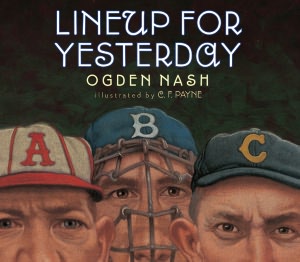
Lineup for Yesterday

Strolling through the children's section of our library, this cover caught my eye.  Though it is about baseball, I was drawn to the illustrations by C.F. Payne.  The pictures are realistic, but with a bit of whimsy and slight exaggerations of features.  Instantly, I knew my sons would like this book.   

The picture book, like the poem it is based upon, is arranged alphabetically naming twenty-four iconic baseball players.  Two letters, I and Z, do not represent baseball players.  Instead, I stands for the Incurable fan (poet Frederick Ogden Nash) and "Z is for Zenith..." 

Lineup for Yesterday, by Ogden Nash features not only the poem, but biographical inserts for each of the players mentioned.  The informative biographical notes were written by Nash's daughter, Linell Nash Smith.  The book can be read in a couple of ways.  For younger listeners the main alphabetical poem is sufficient, but for older audiences, the poem and biographical information can be poured over together.

-

Another book we read offered more comedy than history.  Entitled Levi Strauss Gets a Bright Idea, the book's subtitle, A Fairly Fabricated Story of a Pair of Pants, hints at the tone to come.  Written in the style of a tall tale, Tony Johnston tells the story of Levi Strauss and the invention of denim jeans. 

The book had us laughing with delight as Strauss joins the California Gold Rush, only to discover he is late, there is no gold left, and the men's pants have disintegrated.  Strauss laments his loss of gold and devises a way to fix the miners' pants problem.  Like any good tall tale, these story elements stretch the historical facts and create a humorous adventure. 

The book does conclude with a page telling the real story of Levi Strauss and denim jeans.

-

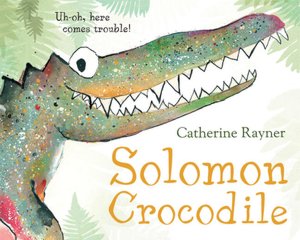
The final book I'll share today was read more for my youngest son.  Solomon Crocodile, written by Catherine Rayner, is a fantastic read aloud book for preschoolers.  The vocabulary used is perfect for my active boy!  Verbs such as stalk, splats, slops, charges, and croaks are his kind of words.  The repetition of several lines makes for a delightful read aloud.

Solomon Crocodile


Linked to Read-Aloud Thursday at Hope Is the Word where you will find a lot more great books!

When the Weather Outside is Cold

Survival at 40 Below

When the January wind starts to blow, and we are driven inside from the cold, it is a great time to learn how animals and people survive and thrive in the colder areas of the globe.  Three books our children have read (or were read aloud) are:

Survival at 40 Below, by Debbie S. Miller, describes life just north of the Arctic Circle in Alaska's Gates of the Arctic National Park and Preserve.  The book begins in autumn.  Animals are scurrying to prepare for the next eight months of winter.  Miller explains how a wide variety of animals get ready for snow and survive cold winter temperatures.  We were fascinated by the frog freezing and the squirrel's cyclic hibernation.  Another interesting tidbit we learned was about a caterpillar that spends 14 winters in the caterpillar phase and after those years, just one summer as a moth.  The book concludes with an author's note explaining her inspiration behind the book and a glossary defining possible unfamiliar terms.

Another book set in an Arctic winter is Welcome to the Ice House, by Jane Yolen.  A plethora of animals from land to sea who find homes in the frigid Arctic winter are presented.  Lovely illustrations by Laura Regan set a tranquil tone and the lyrical text creates a melodious read aloud.  A final page entitled "Did You Know?" explains the origin of the term 'arctic' and offers the University of Alaska Museum website address for more information.

For a different perspective on the cold, the book Antler, Bear, Canoe: A Northwoods Alphabet Year, by Betsy Bowen depicts life in the northwoods of Minnesota.  While moving through the alphabet, Bowen shares a bit about the northwoods from January to December.  Each entry portrays an activity, observation, or incident from the author's life.  This provides readers with a more personal connection with life in the northwoods.  The wood block illustrations lend to the rustic appeal of the book.


Over the years, we have enjoyed a great variety of books set in the Arctic or winter time.  Below, I have listed a few all time favorites.

Other books set in the Arctic or cold, winter time:
In the Far North, by Lola Kamalova
Arctic Son, by Jean Craighead George
The Long Winter, by Laura Ingalls Wilder
Adventures of an Arctic Missionary series, by Gloria Repp
Trapped by the Mountain Storm, by Aileen Fisher
Snowflake Bentley, by Jacqueline Briggs Martin
Tikta'Liktak: An Inuit-Eskimo Legend, retold by James Houston

Traveling Along Alphabet Letters

Just the other day, I was reading a post about fun activities to teach preschoolers alphabet letters.  Aurie mentioned making a road in the shape of a letter.  I knew this would be fun for my preschooler, and decided to try her suggestion one day.  We made an 'a' from his wooden train rails and he drove his vehicle around it.  Then, we made a 'b' and he took a few turns about his 'b' road.


Afterward, he started naming all the letter roads he wanted to build. 
Definitely a successful and fun hand on learning activity; thank you, Aurie for your sharing!
Related Posts Plugin for WordPress, Blogger...